Why start with a bucket?
A bucket makes the scale of the problem immediately clear. The key is small enough to fit in your hand. The water around Brine Bay stretches far beyond the island. Your first contribution is a load you can carry yourself.
You scoop water, bring it to collection, and pour it in. That delivery matters: moving water into a container and removing it from the ocean's shared total are different steps. The collection system gives the work a destination and establishes the pattern that later pumps and production networks expand.
The bucket also gives you a useful reference point. Once machinery starts moving water for you, you can see exactly which part of the original job it has taken over.
What happens to the water you deliver?
Delivered water advances the ocean total and supports the game's progression. Pumps increase how much water your operation can move, while research and construction open up more capable equipment. Growing the factory gives you a practical way to keep searching.
The search counts water that has actually been delivered. Moving the same water between containers does not create extra progress. A larger bucket or a better pump helps by delivering more water, rather than by changing the rules for the key.
As your operation grows, a simple trip from shore to collection becomes a network of intakes, water routes and working machinery. Our guide to building a coastal factory follows that transition.
Do you have to empty the ocean to find the key?
No. In the current development build, the key can be recovered before the ocean is empty. Its position in the search is fixed for that expedition, and the collection grate catches it when the corresponding water is delivered. You then collect the key and use it at the shed.
That possibility should not be mistaken for a promise of an early find. There is an enormous amount of water to search. The factory remains the way to make a small personal task achievable at an increasingly unreasonable scale.
Finding the key and completely draining the ocean are distinct accomplishments. The main objective is getting back into your shed. Players who want to continue have a larger engineering challenge waiting beyond it.
What changes as the sea falls?
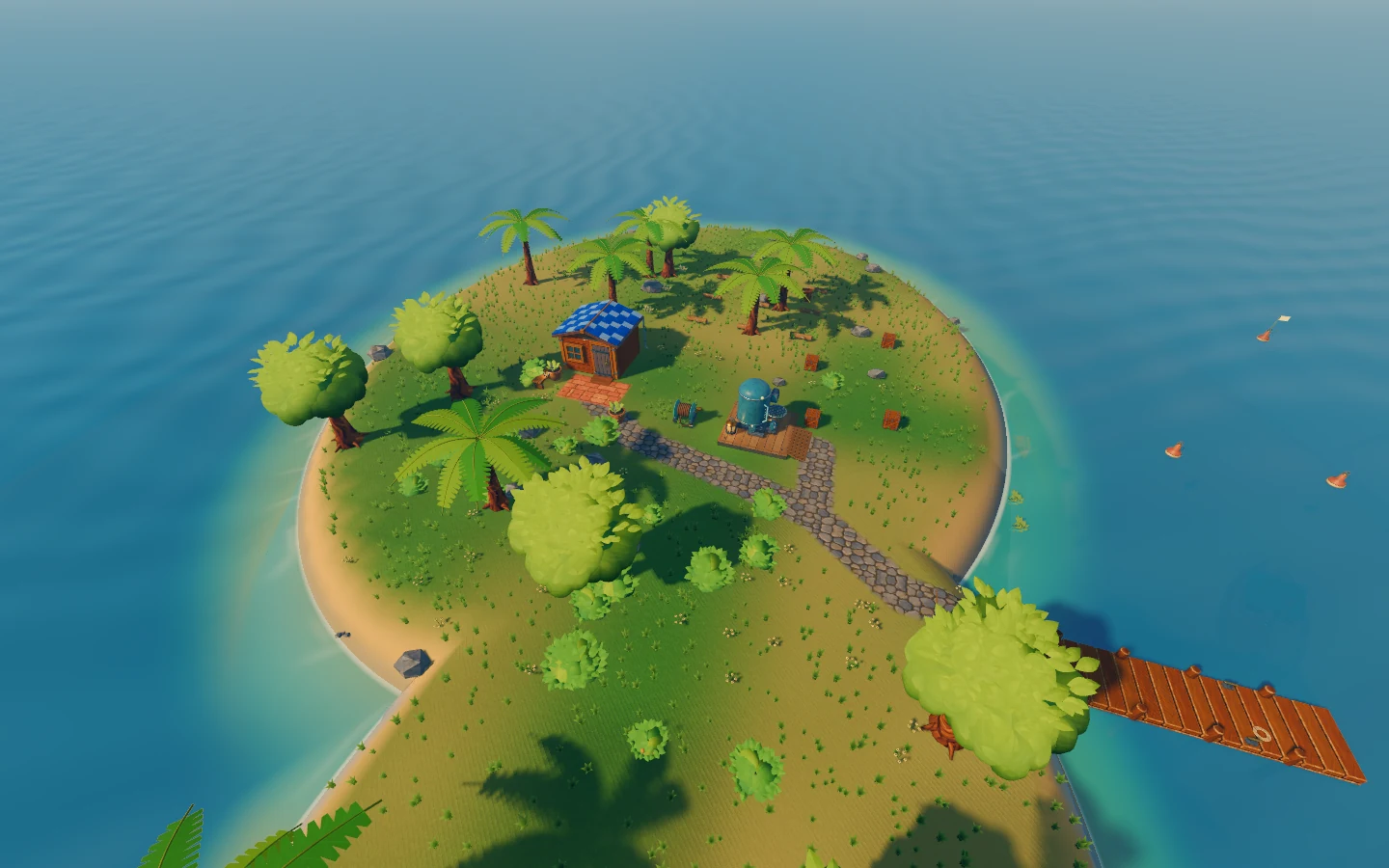
The landscape becomes another way to read your progress. More shoreline and seabed become visible as water levels drop. Ground that was underwater becomes somewhere to walk, and wrecks emerge as new places to investigate.
These discoveries give you a reason to step away from the machinery. You can follow a newly exposed route, inspect a wreck, or return to the factory with a different view of what you are working toward. The collection system also turns up curious objects, including treasures and keys that belong to somebody else.
The sea-level presentation is tuned for a game: the coast changes visibly as your operation advances. Unplug the Ocean is a stylized factory-and-exploration game, rather than a scientific model of Earth's oceans.
See the loop in motion
The 30-second gameplay reel shows the starting scoop, pumps, collection and equipment upgrades. It is development footage, so the appearance and balance of individual systems can change.
For current release information, use the official game facts. A public release date, price and Steam wishlist link have not yet been announced.