
What do the five physical tiers mean?
Equipment progression is visible on the island. Upgrades change the machinery's physical construction and silhouette, so a growing factory has a different presence in the world. The deep-pump previews below show three points along that progression.
Those changes sit alongside functional improvements. Different equipment families can gain throughput or storage, while more demanding machinery can require additional power or supporting infrastructure. The details depend on the building and the current development balance.
There is no single upgrade that removes the need to understand the rest of the operation. The useful question is what your present factory can supply, and which part is limiting the work.
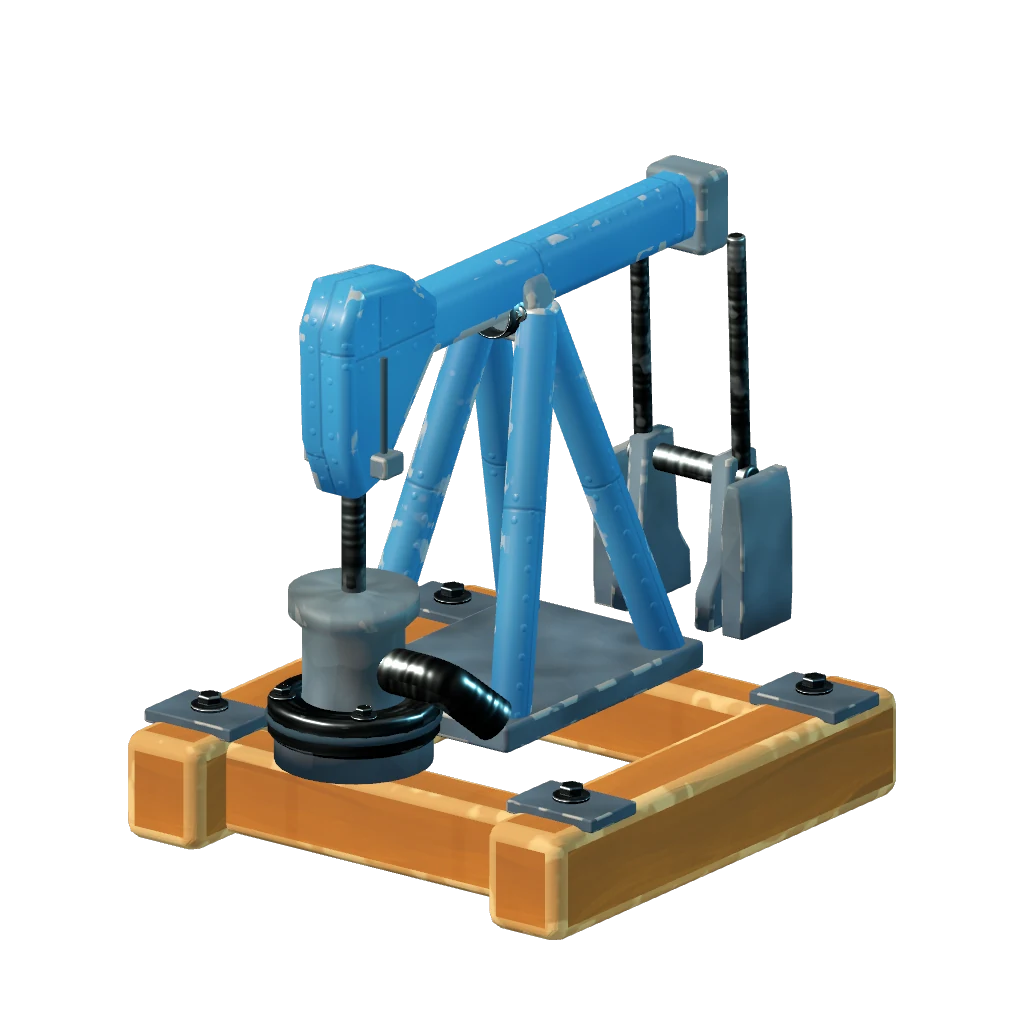
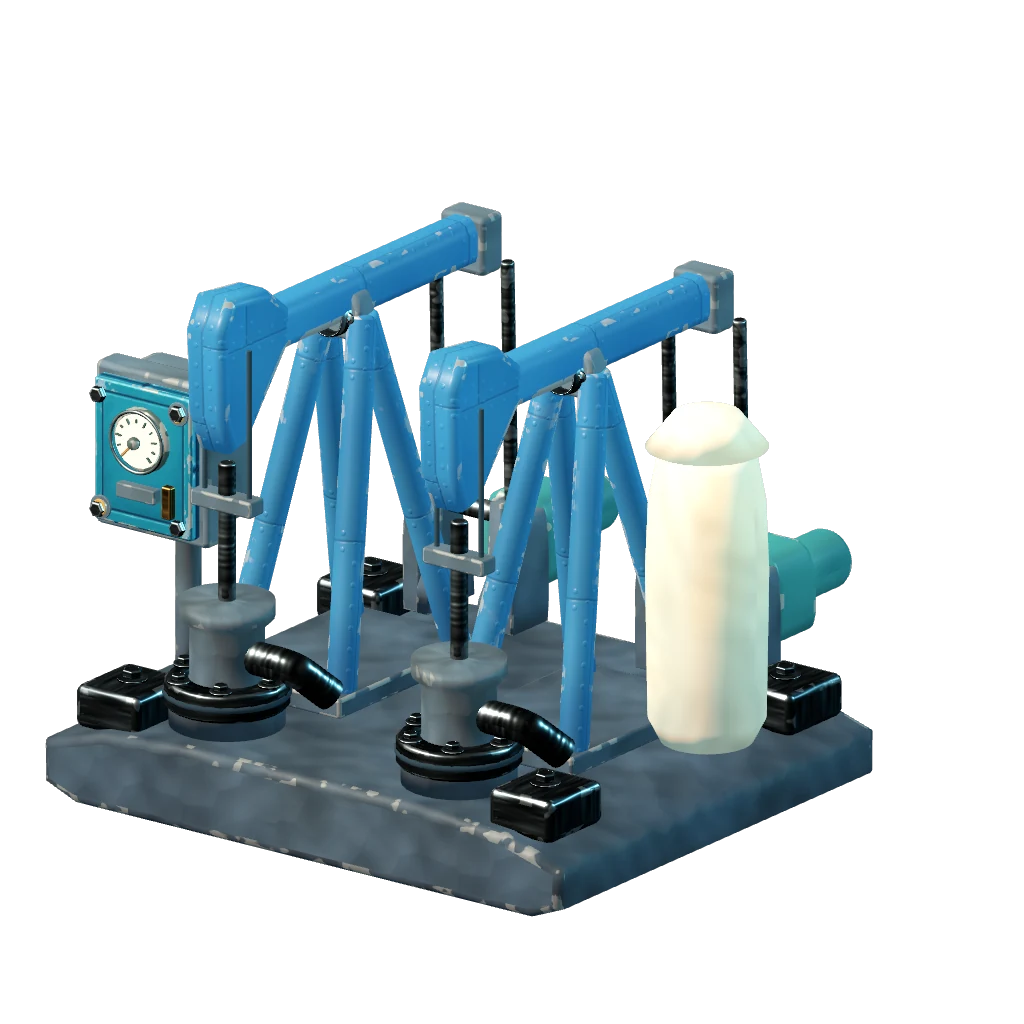
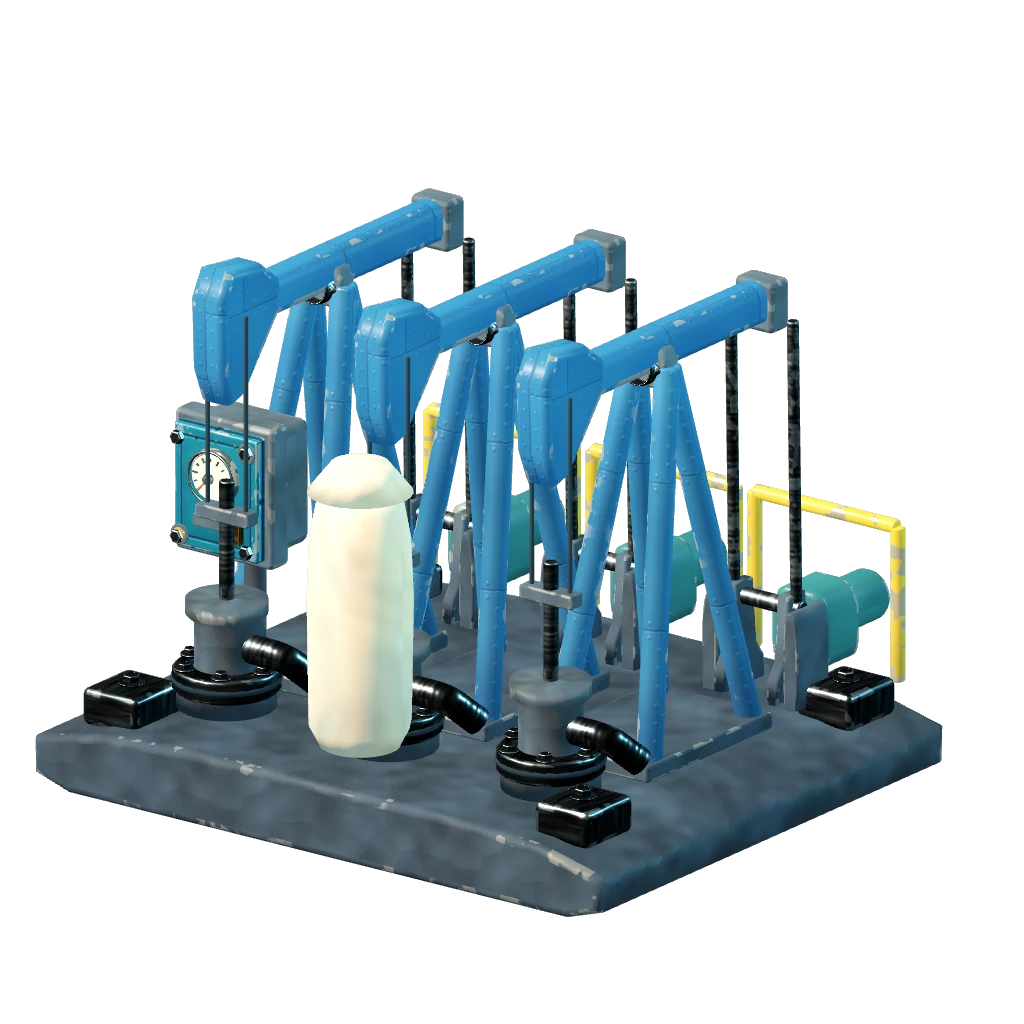
What should you check before upgrading a pump?
Begin at the intake. A pump needs access to the water it is meant to move. Next, check its operation and power requirements. Then follow its output through the connected route to collection or the intended receiver.
A machine with no usable intake cannot benefit from a better outgoing pipe. A powered pump without sufficient electricity cannot achieve its intended output. And a full downstream buffer can stop a productive machine even when its own inputs are available.
Check the stopping reason in the machine's panel before spending construction materials. A missing connection calls for a connection. A capacity limit calls for a different decision.
How can an upgrade move the bottleneck?
Consider a pump that can already fill its outgoing route faster than that route can carry water. Raising the pump's capacity first gives it more potential, but the delivery route still limits the useful result. Improving the route or its receiver may be the next effective step.
Once that limit is removed, another one can become visible. A larger operation might need more power, a steadier input supply, or room for stored output. This is a normal part of growing a connected factory: the thing holding you back changes as you solve each constraint.
It is worth watching a complete delivery cycle after a change. A machine briefly running faster is encouraging; a route that keeps delivering is the result you are building toward.
Transport has its own progression
Pipes, gas lines, cables and conveyors serve different purposes, and transport improvements matter alongside building upgrades. In the current campaign, upgrading a transport type raises that type across the network, including new pieces you place afterward.
That makes the network a meaningful part of your construction choices. You can improve a type of connection that serves several machines rather than rebuilding each route simply to match one upgraded producer.
Exact costs and ratings are development details and may change. The lasting principle is to check the complete path from source to destination. More water removed is the useful outcome; the number printed on an isolated machine is only one part of it.
Choosing the next project
If equipment is stopped, address the stated reason first. If everything runs but progress is slow, look for the step that stays at capacity while another waits. That observation gives you a grounded reason to improve a machine, a connection or the supply feeding it.
Sometimes the next project is a higher-tier pump. Sometimes it is a modest change that lets the pump you already own keep working. Both can move the search forward.
Read From a bucket to a coastal factory for the production loop, or watch the 30-second gameplay reel to see equipment from the development build. Release information lives on the official facts page.